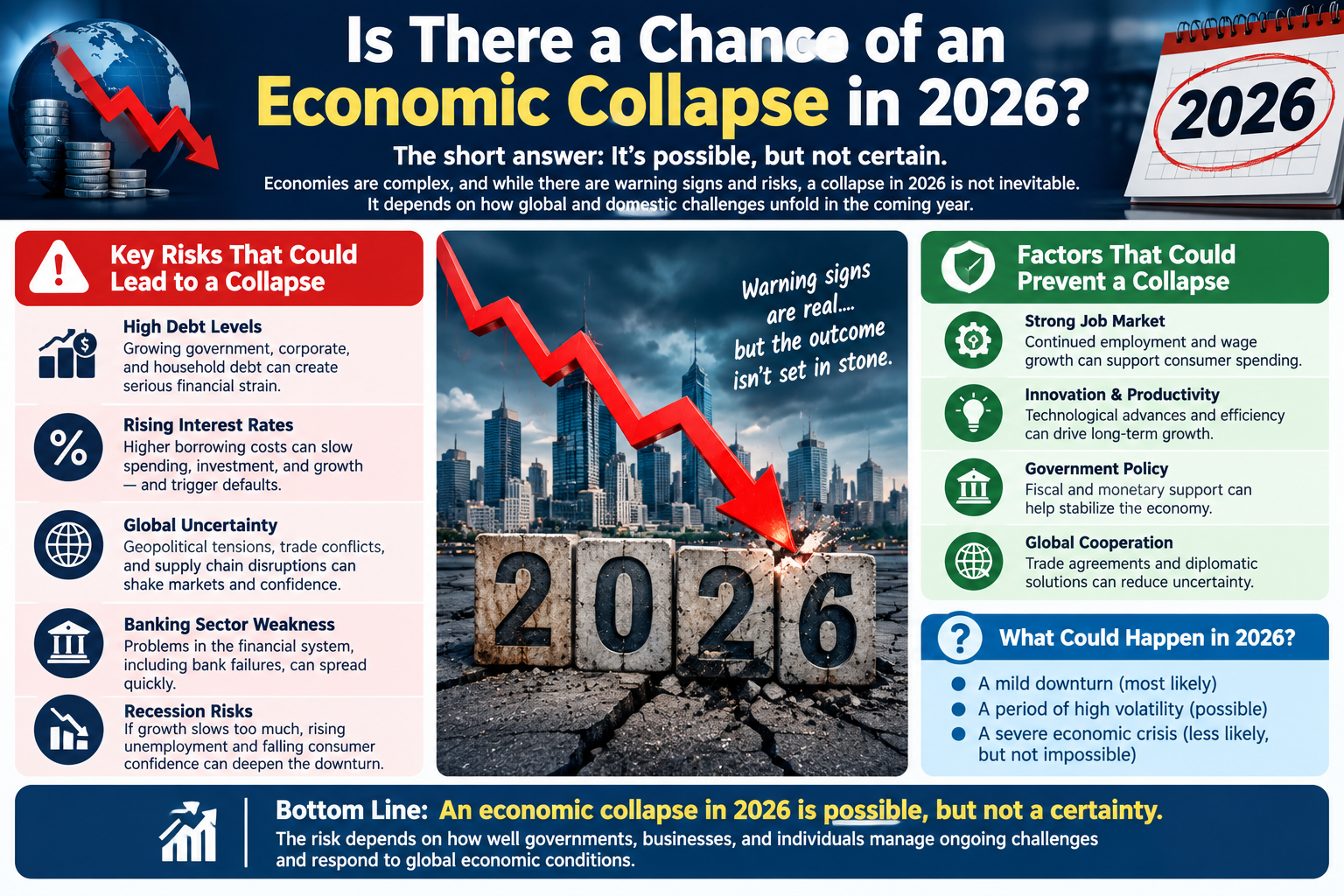
The possibility of an economic collapse is a concern for governments, businesses, investors, and households. Economic conditions can change rapidly when inflation, high debt, financial instability, geopolitical conflicts, unemployment, or major disruptions affect an economy. As the world enters 2026, questions about whether the global economy could experience a severe recession or even an economic collapse have attracted significant attention.
However, it is important to distinguish between an economic slowdown, recession, financial crisis, and economic collapse. These terms describe different levels of economic difficulty. A slowdown occurs when economic growth becomes weaker. A recession involves a significant decline in economic activity. A financial crisis can involve failures in banks, financial markets, or credit systems. An economic collapse is much more severe and could involve widespread business failures, extremely high unemployment, major financial disruptions, and a sharp decline in economic output.
There are several risks that could create economic problems in 2026, but there are also factors that could help economies remain stable.
Global Debt and Financial Pressure
One of the major risks facing the global economy is high levels of government, household, and corporate debt. Borrowing can support economic growth when money is used productively, but high debt can become a problem when interest rates and repayment costs increase.
Governments with large debt obligations may have less flexibility to respond to an economic crisis. Businesses with significant borrowing may also struggle if financing costs remain high or revenues decline.
Households can face similar difficulties. If mortgage payments, credit-card balances, or other borrowing costs increase faster than incomes, consumers may reduce their spending. Since consumer spending is an important part of many economies, a significant decline in consumption can slow economic growth.
High debt does not automatically cause an economic collapse. The risk depends on factors such as interest rates, economic growth, government finances, income levels, and the stability of financial institutions.
Inflation and Interest Rates
Inflation is another important factor. When prices rise rapidly, households lose purchasing power because their income does not buy as much as it previously did.
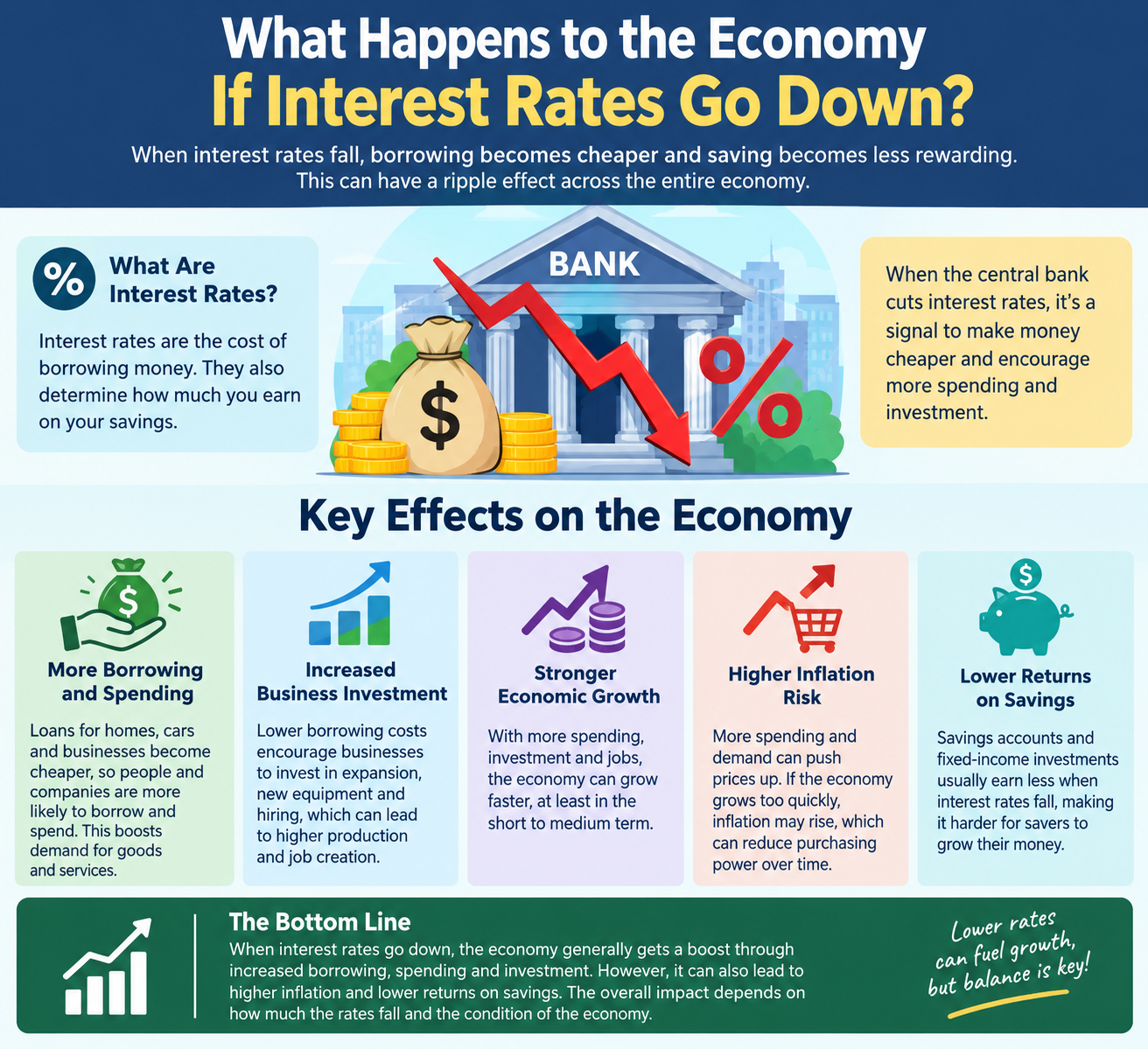
Central banks often respond to high inflation by raising interest rates. Higher rates can reduce inflation by making borrowing more expensive and encouraging saving. However, they can also slow economic activity.
Higher interest rates can make mortgages, business loans, and consumer credit more expensive. Companies may delay investment, while households may reduce spending. If economic activity weakens significantly, unemployment could rise.
The challenge for policymakers is finding a balance between controlling inflation and avoiding an unnecessarily severe economic slowdown.
The Risk of Recession
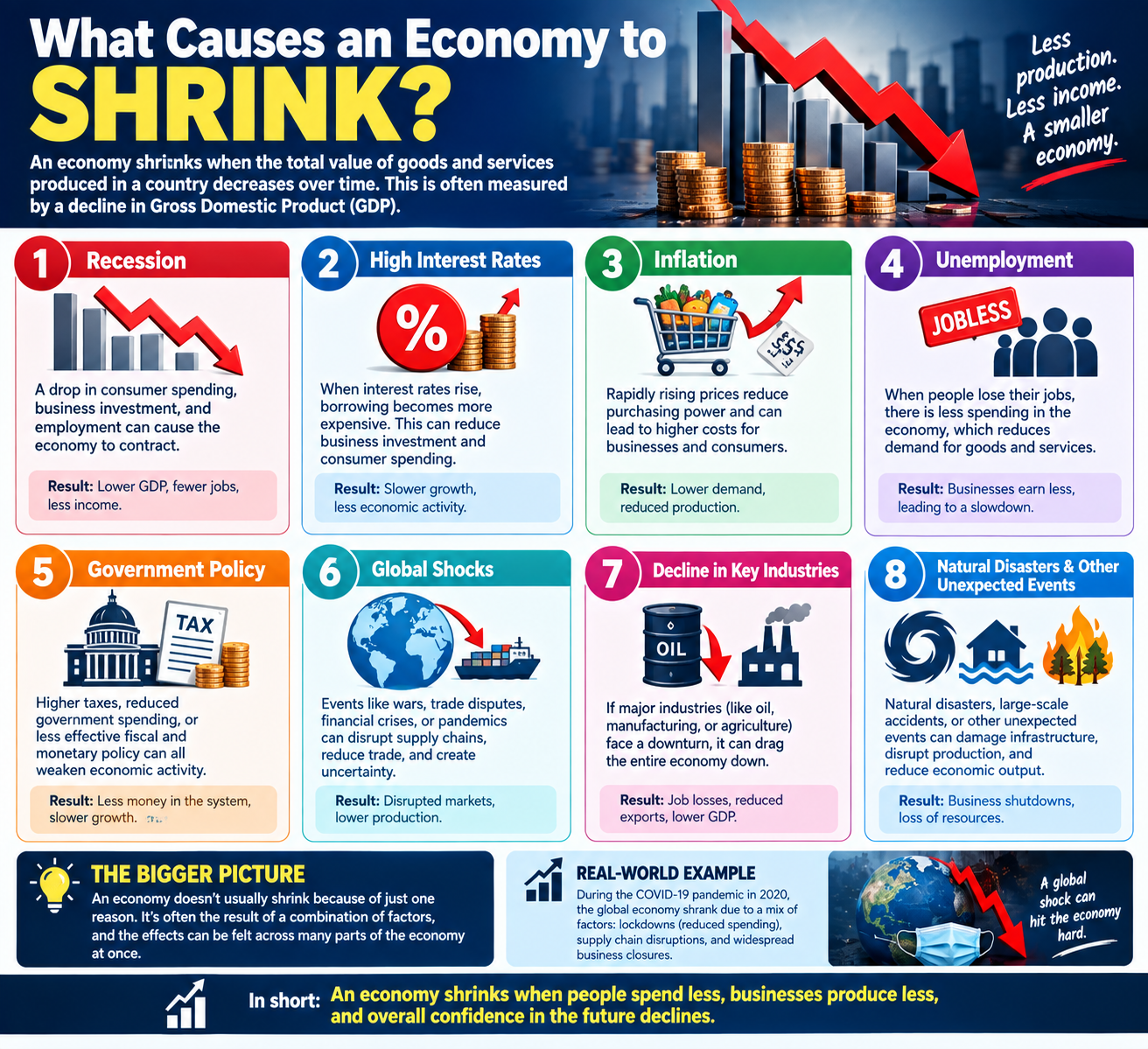
A recession is considerably more likely than a full economic collapse. Economies naturally experience periods of expansion and contraction, and a recession can occur when consumer spending, investment, employment, and production decline.
A recession can be painful for households and businesses. Companies may reduce hiring, workers may lose jobs, and investment can decline.
However, modern economies have mechanisms designed to reduce the effects of recessions. Central banks can adjust interest rates and provide liquidity to financial markets. Governments can use fiscal policies and social programs to support households and businesses.
Therefore, even if economic growth becomes weak in 2026, that does not necessarily mean the economy is heading toward collapse.
Banking and Financial-System Risks
A major economic collapse could occur if problems in the financial system spread rapidly. Banks are particularly important because they provide credit to households and businesses.
If banks experience major losses or lose confidence in their ability to operate, lending can decline. Businesses may struggle to obtain financing, consumers may find credit harder to access, and investment could fall.
Financial markets can also experience periods of extreme volatility. Large declines in stock, bond, or property markets can reduce wealth and weaken confidence.
Nevertheless, financial institutions are subject to regulation and capital requirements designed to reduce systemic risks. Central banks and governments also have tools that can be used during financial emergencies.
These safeguards do not eliminate financial risk, but they can reduce the probability that financial problems develop into a complete economic collapse.
Geopolitical Conflicts
Geopolitical events are another source of economic uncertainty. Wars, political conflicts, trade disputes, sanctions, and disruptions to important shipping routes can affect energy prices, food supplies, manufacturing, and international trade.
For example, a major disruption in the supply of oil or natural gas could increase energy costs. Higher energy prices can raise transportation and production costs, contributing to inflation.
Trade restrictions can also disrupt global supply chains. Companies that depend on imported components may experience shortages or higher costs.
The global economy is highly interconnected, meaning that a major disruption in one region can affect businesses and consumers elsewhere.
The Role of Consumer and Business Confidence
Confidence plays an important role in economic activity. Consumers who are worried about unemployment or falling incomes may postpone major purchases and increase their savings.
Businesses may behave similarly. If companies expect weak demand, they may delay hiring, expansion, and investment.
If confidence falls sharply across an economy, economic activity can weaken further. This can create a negative cycle in which weaker spending reduces business revenue, leading to lower investment and employment.
On the other hand, stable consumer and business confidence can help an economy continue growing even when certain sectors face difficulties.
Technology and Productivity Could Support Growth
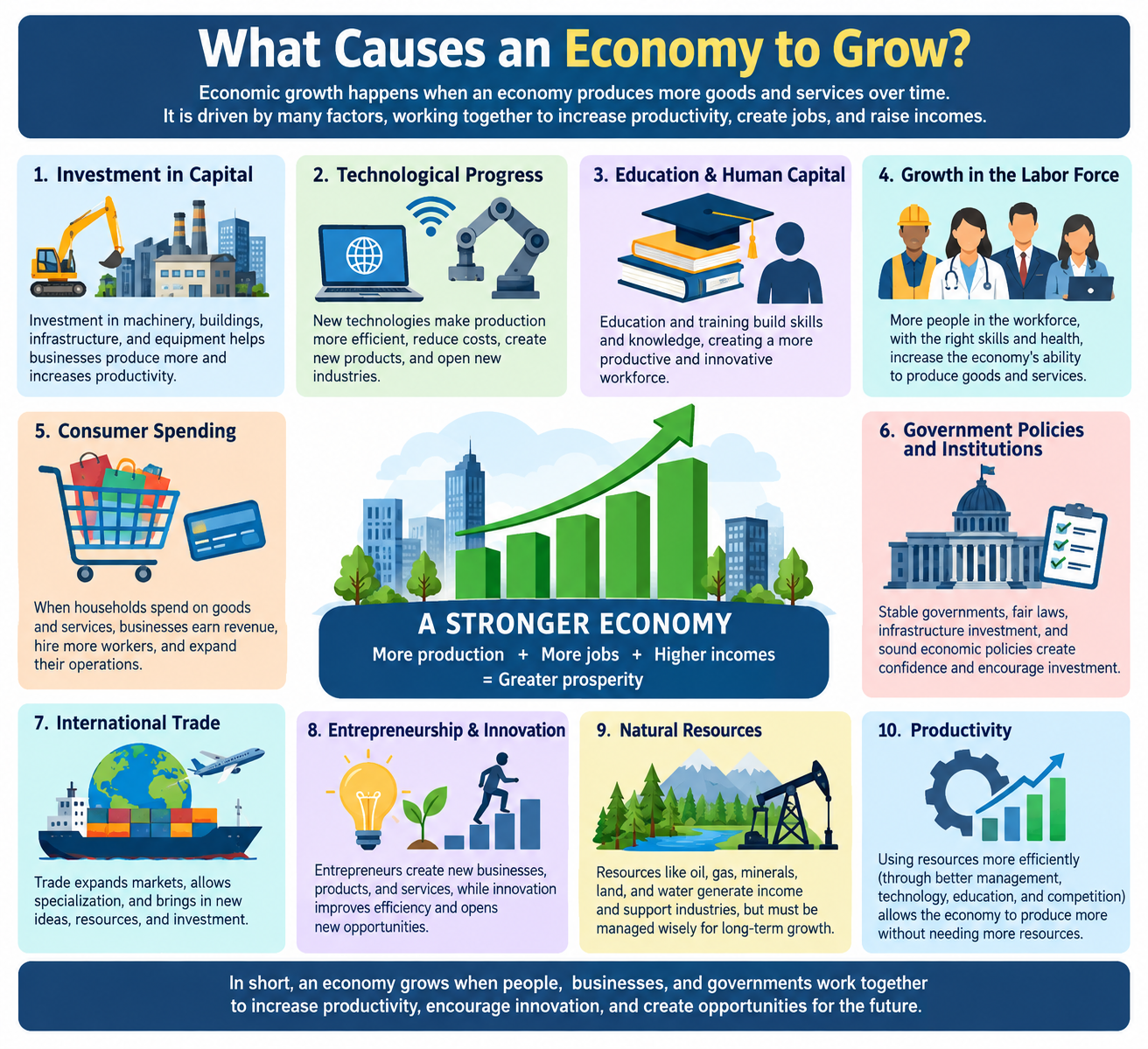
Not every economic factor points toward a crisis. Technological innovation could support economic growth by increasing productivity and creating new economic opportunities.
Developments in artificial intelligence, automation, digital infrastructure, biotechnology, advanced manufacturing, and other technologies could allow businesses to produce more efficiently.
Higher productivity can help economies grow even when labor forces are expanding slowly. It can also create new industries and improve the competitiveness of existing businesses.
However, technological change can also create challenges. Workers may need new skills, some occupations may decline, and businesses may need significant investment to adopt new technologies.
Could an Economic Collapse Actually Happen?
A severe economic collapse in 2026 is possible in the sense that no economy is completely protected from unexpected shocks. A combination of major financial instability, geopolitical conflict, severe supply disruptions, debt problems, and a loss of confidence could potentially produce a serious crisis.
However, predicting an economic collapse with certainty would be misleading. Economic forecasting is inherently difficult because economies are influenced by millions of decisions made by households, companies, governments, investors, and financial institutions.
It is also important to remember that economic systems have considerable resilience. Businesses adapt, consumers change their behavior, governments introduce policies, and central banks can respond to financial stress.
Therefore, the more useful question is not simply whether an economic collapse will happen, but what risks could cause a severe downturn and how prepared economies are to respond.
What Would an Economic Collapse Look Like?
A genuine economic collapse would likely involve several problems occurring simultaneously. These could include a dramatic fall in economic output, widespread unemployment, severe financial-market instability, business failures, disruptions to credit, and a substantial decline in consumer and business confidence.
Such an event would be significantly more severe than an ordinary recession.
For households, the effects could include job losses, falling incomes, difficulty obtaining credit, and reduced access to certain goods and services. Businesses could face declining sales, financing problems, supply-chain disruptions, and increased operating costs.
Governments would likely face pressure to provide financial assistance while dealing with declining tax revenues and increasing demand for public support.