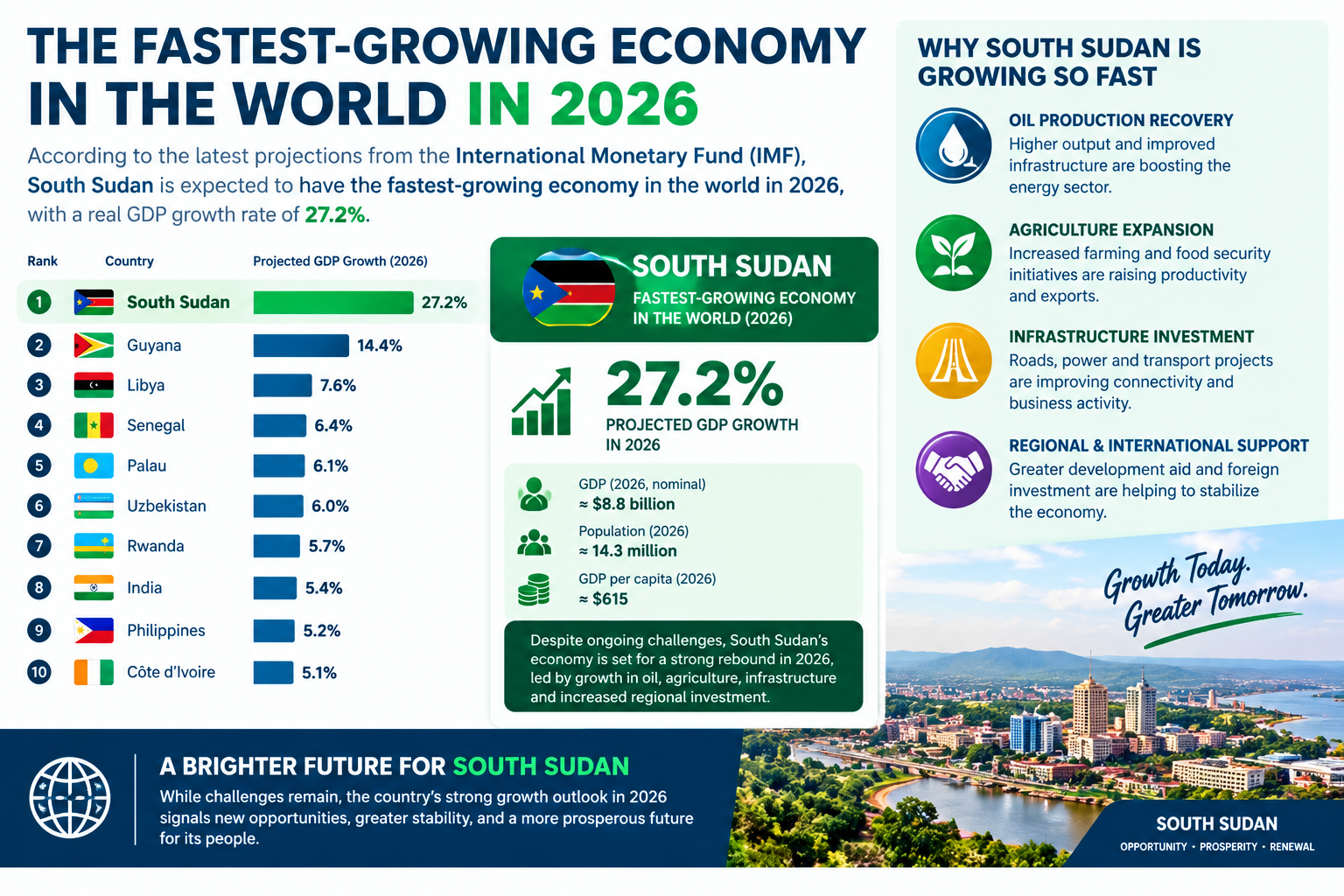
When people talk about the world’s fastest-growing economies, countries such as India, China and other major emerging markets often come to mind. However, in 2026, the country at the top of the growth rankings is a much smaller nation: Guyana.
According to the International Monetary Fund (IMF), Guyana’s real GDP is projected to grow by approximately 16.2% in 2026. That is an extraordinary growth rate compared with the global economy, which the IMF projects will expand by about 3.0% in 2026.
Guyana’s remarkable economic expansion is largely connected to the rapid development of its oil industry. But the country’s story is about more than oil. Large-scale infrastructure investment, expansion in non-oil sectors and growing government revenues are also transforming the economy.
So, why is Guyana growing so quickly, and can this spectacular growth continue?
Guyana: The Fastest-Growing Economy
Guyana is a small South American country with a population of only about one million people. For decades, its economy was relatively modest and depended heavily on agriculture, mining and other natural resources.
That changed dramatically after the discovery and development of large offshore oil reserves.
Oil production has transformed Guyana’s economic prospects. The IMF previously described Guyana as having the world’s highest real GDP growth rate, averaging around 47% per year between 2022 and 2024. Rapidly expanding oil production, strong non-oil activity and large public infrastructure investment were major contributors to that extraordinary performance.
The country’s economic transformation continued into 2026. The IMF’s country data currently puts Guyana’s projected real GDP growth at 16.2% for 2026, far above the growth rates expected for most major economies.
Why Is Guyana Growing So Fast?
The simplest explanation is oil production.
When a country discovers a major natural resource, its economy can expand rapidly as companies invest billions of dollars in extraction, transportation and infrastructure.
For Guyana, offshore oil production has created a new source of export revenue. As production increases, the country earns more foreign currency and receives greater government revenues.
That money can then support investment in roads, ports, electricity, healthcare, education and other infrastructure.
This creates a powerful economic cycle.
More oil production can lead to higher government revenues. Higher revenues can finance infrastructure. Better infrastructure can support private-sector investment. New investment can create jobs and increase economic activity.
However, this rapid expansion also creates challenges, which means a high GDP growth number does not automatically mean every citizen becomes wealthy at the same speed.
Guyana Is Not the Only Fast-Growing Economy
Although Guyana is at the top of the rankings, several other countries are expected to record very strong economic growth in 2026.
The IMF’s April 2026 projections placed Ethiopia at around 9.2%, Guinea at about 8.7%, Benin at approximately 7.0%, Libya at around 6.7%, and India at approximately 6.5%.
These economies have very different reasons for growing quickly.
Ethiopia is benefiting from investment, expanding economic activity and structural changes within its economy. Guinea has significant natural resources, while Libya’s growth outlook is heavily influenced by oil production.
India is a particularly important case because, unlike Guyana, it is a huge economy with more than a billion people.
The IMF’s July 2026 forecast puts India’s growth at about 6.4%, making it one of the fastest-growing major economies in the world.
India: The Fastest-Growing Major Economy
If the question is not simply “Which country has the highest percentage growth?” but instead asks which major economy is growing fastest, India is one of the most important answers.
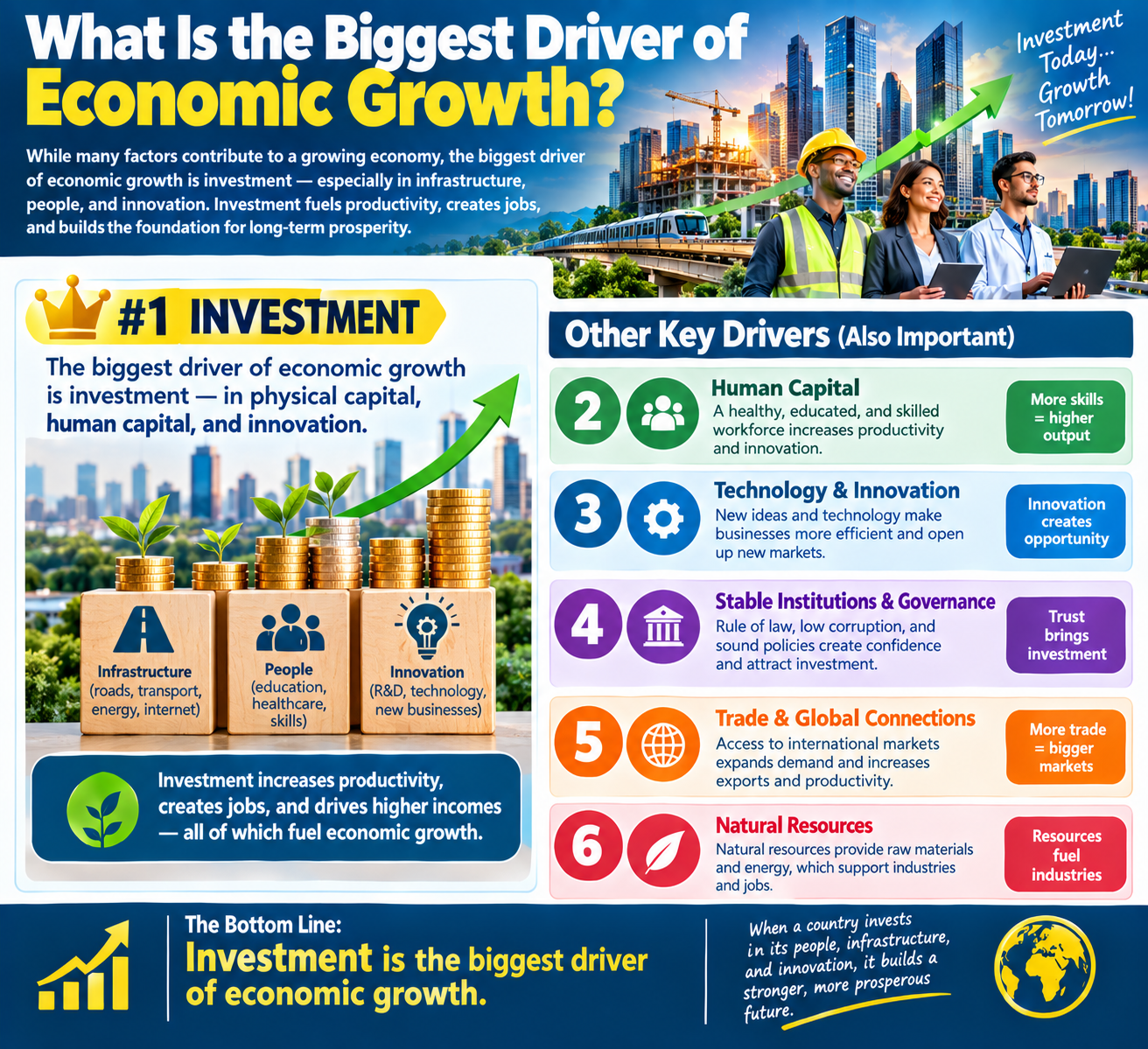
India’s economy is benefiting from a large domestic consumer market, expanding digital services, manufacturing investment, infrastructure development and a growing technology sector.
The country is also becoming increasingly important in global supply chains as companies diversify manufacturing and reduce their dependence on individual countries.
India’s projected growth of approximately 6.4% in 2026 is more than double the IMF’s projected global growth rate of 3.0%.
This means India’s importance to the global economy could continue increasing during the coming years.
What About China?
China remains one of the world’s most important economies, but its growth rate is expected to be considerably lower than Guyana’s or India’s.
The IMF’s July 2026 forecast puts China’s economic growth at around 4.6% in 2026.
China continues to benefit from its enormous manufacturing base, exports, infrastructure and technological capabilities.
However, the country is also facing challenges including weaker property activity, demographic pressures and changing global trade relationships.
Even with slower growth, China’s enormous economic size means that a 4% or 5% expansion can add far more economic output in absolute terms than a double-digit growth rate in a small economy.
Why GDP Growth Can Be Misleading
It is important to understand that the country with the fastest GDP growth is not necessarily the country where people are becoming the wealthiest.
Guyana’s 16.2% projected growth is extraordinary, but Guyana has a very small population and is starting from a much smaller economic base than countries such as the United States, China or India.
A small economy can grow extremely quickly when a major new industry begins producing at scale.
This is known as a base effect.
For example, if an economy worth $10 billion increases by $2 billion, its GDP growth is 20%. But adding $2 billion to a much larger economy would represent a much smaller percentage increase.
Therefore, GDP growth should be considered alongside GDP per capita, employment, inflation, government finances and living standards.
The Risks Facing Guyana
Guyana’s economic success also comes with risks.
The biggest is its dependence on oil.
Oil prices can rise and fall dramatically. If global oil prices decline or production is disrupted, government revenues and economic growth could be affected.
There is also the long-term challenge of managing natural-resource wealth responsibly.
Countries that discover large quantities of oil can experience rapid economic development, but poor management can create inflation, corruption, inequality or excessive dependence on a single industry.
Guyana therefore faces an important challenge: how can it turn temporary natural-resource wealth into long-term prosperity?
Investing oil revenues in education, healthcare, infrastructure, technology and diversified industries could help the country build an economy that remains strong even if oil becomes less important in the future.
What Guyana’s Growth Means for the Global Economy
Although Guyana is a small economy, its transformation demonstrates an important trend in the global economy: natural resources remain extremely valuable.
Oil, gas, critical minerals and other commodities will continue to influence international investment and economic growth.
At the same time, the global economy is becoming increasingly shaped by technology.
The IMF’s July 2026 outlook emphasizes that AI-related demand is supporting countries integrated into global technology supply chains, while geopolitical and energy shocks are creating significant risks elsewhere.
This means the fastest-growing economies of the future may come from very different backgrounds.
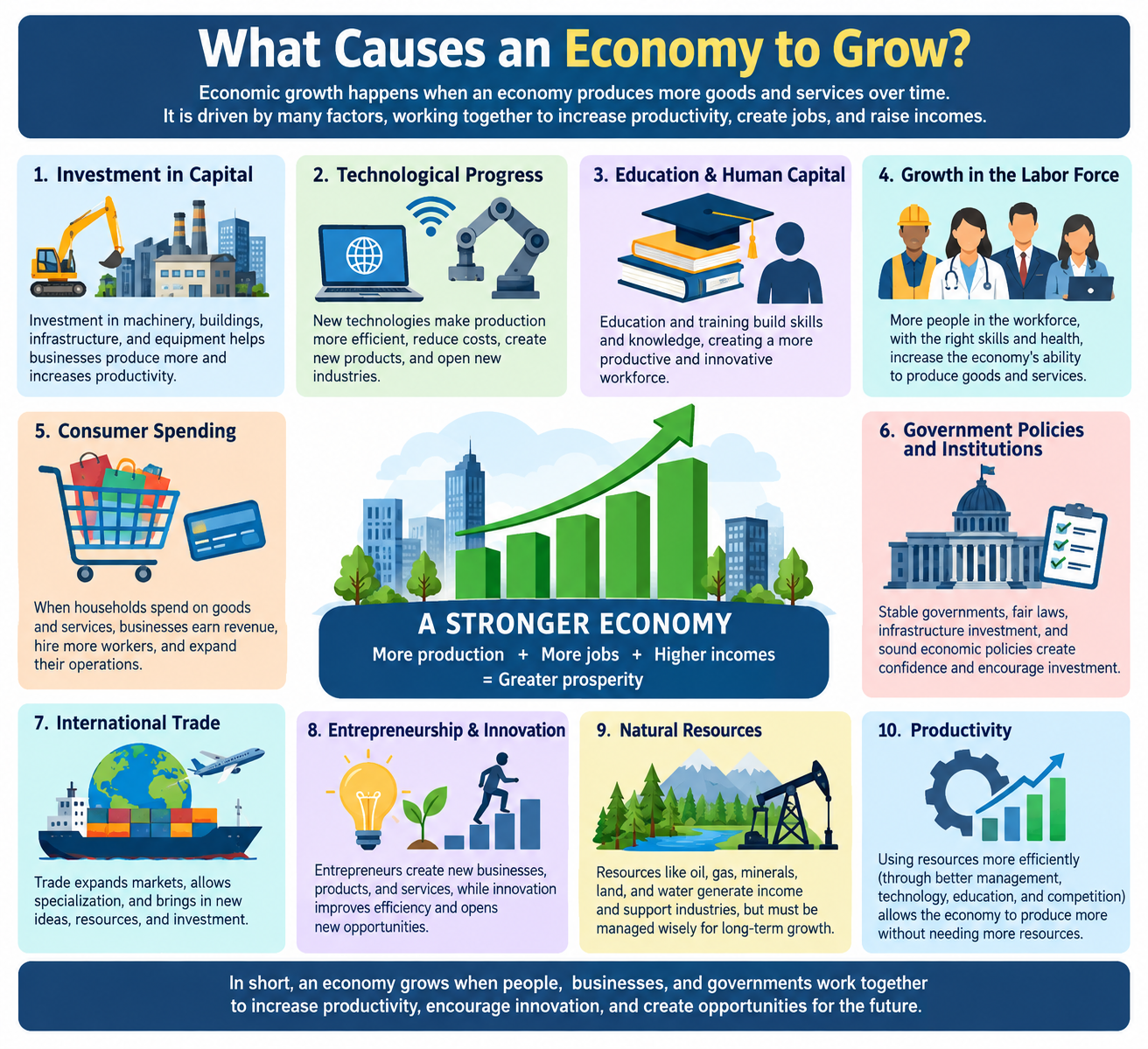
Some may grow because of oil and minerals. Others may grow because of technology, manufacturing, financial services or renewable energy.