When people discuss the global economy, attention often goes to countries with rapid growth, booming industries and rising investment. But there is another important side of the story: the economies that are growing very slowly or not growing at all.
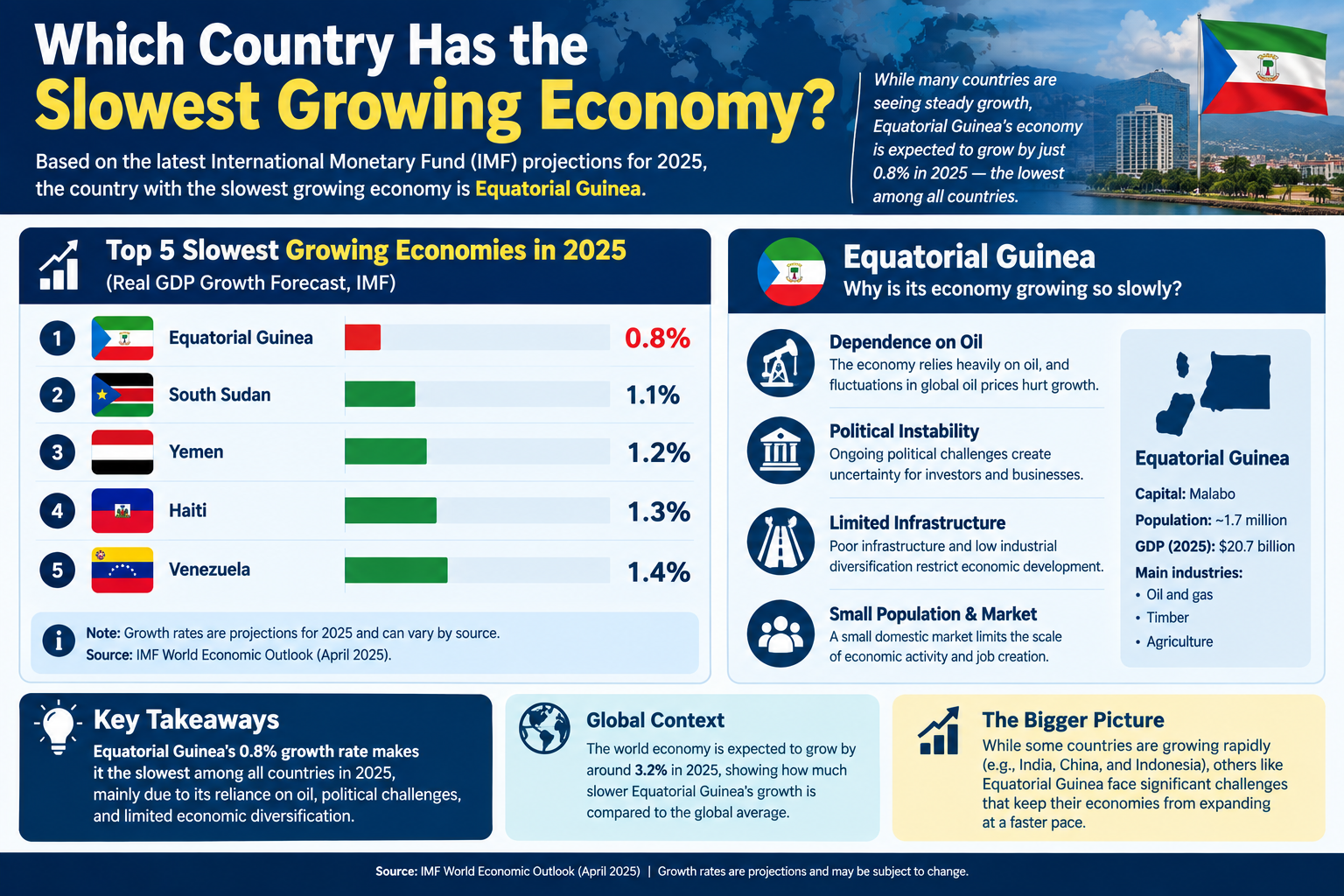
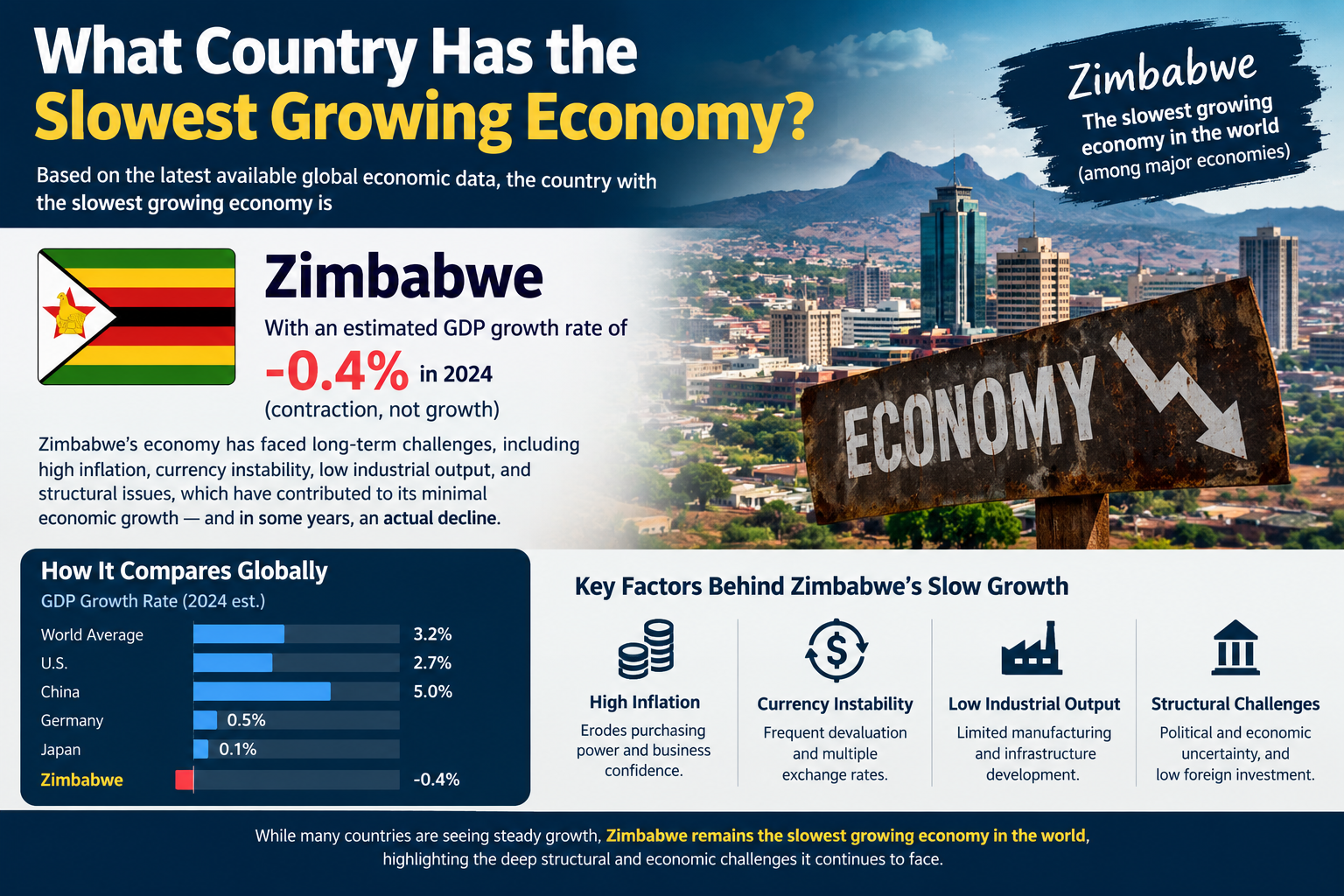
In 2026, one of the weakest economic performances is expected in Sudan, where the economy continues to suffer from the devastating effects of conflict. However, the answer depends on whether we define “slowest-growing” as the lowest growth rate among all countries, or as an economy that is experiencing an outright contraction.
According to current international forecasts, several countries face extremely difficult economic conditions in 2026. Sudan is particularly affected by war and the destruction of productive capacity, while other economies are struggling with political instability, weak investment, debt, demographic challenges or declining commodity production.
Sudan: An Economy Under Extreme Pressure
Sudan’s economy has been devastated by the conflict that began in 2023.
The war has disrupted agriculture, destroyed infrastructure, displaced millions of people and severely damaged businesses and financial institutions. Economic activity has therefore been dramatically reduced.
Unlike countries experiencing a normal economic slowdown, Sudan faces a much deeper structural crisis. Factories, farms, transportation networks and commercial activities have been disrupted, making it extremely difficult for the economy to return to normal.
The World Bank has described Sudan’s economic situation as catastrophic, with conflict causing enormous damage to the country’s economy and human capital.
This illustrates an important point: economic growth depends on stability. Businesses need functioning infrastructure, workers need safe environments and investors need confidence that their investments will be protected.
When these conditions disappear, economic activity can collapse.
What Does “Slowest-Growing Economy” Actually Mean?
Economic growth is normally measured by the change in a country’s real gross domestic product, or GDP.
If a country’s GDP grows by 5%, its economy is expanding rapidly.
If GDP grows by 1%, the economy is expanding slowly.
If GDP growth is 0%, the economy is essentially stagnant.
If GDP falls by 2%, the economy is contracting.
Therefore, the country with the “slowest-growing economy” may actually have negative growth, meaning its economy is shrinking.
This distinction is important when comparing countries.
A country growing at 0.2% is technically performing better than a country whose economy is shrinking by 3%.
Why Do Some Economies Grow Slowly?
There is no single reason why an economy performs poorly.
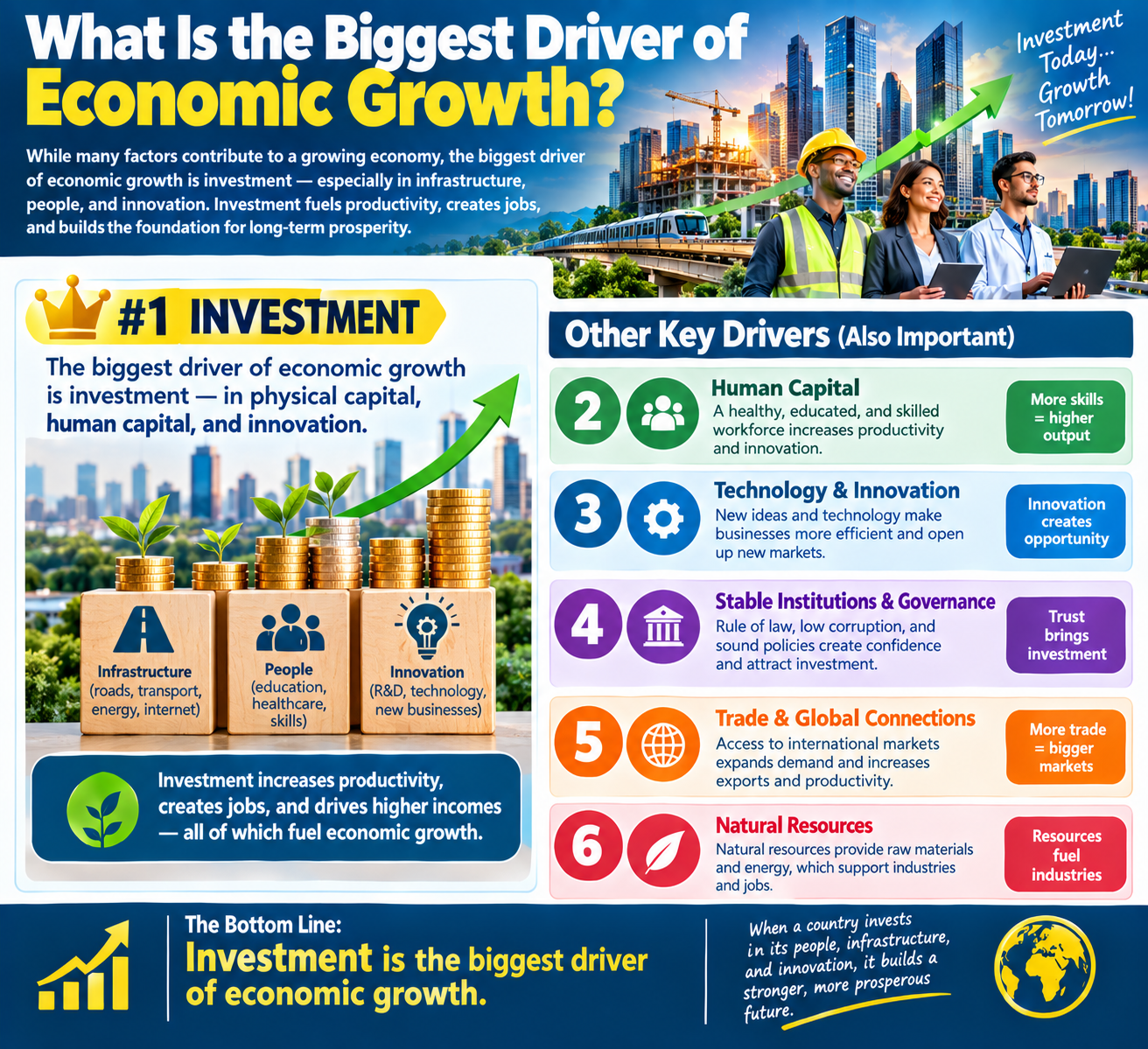
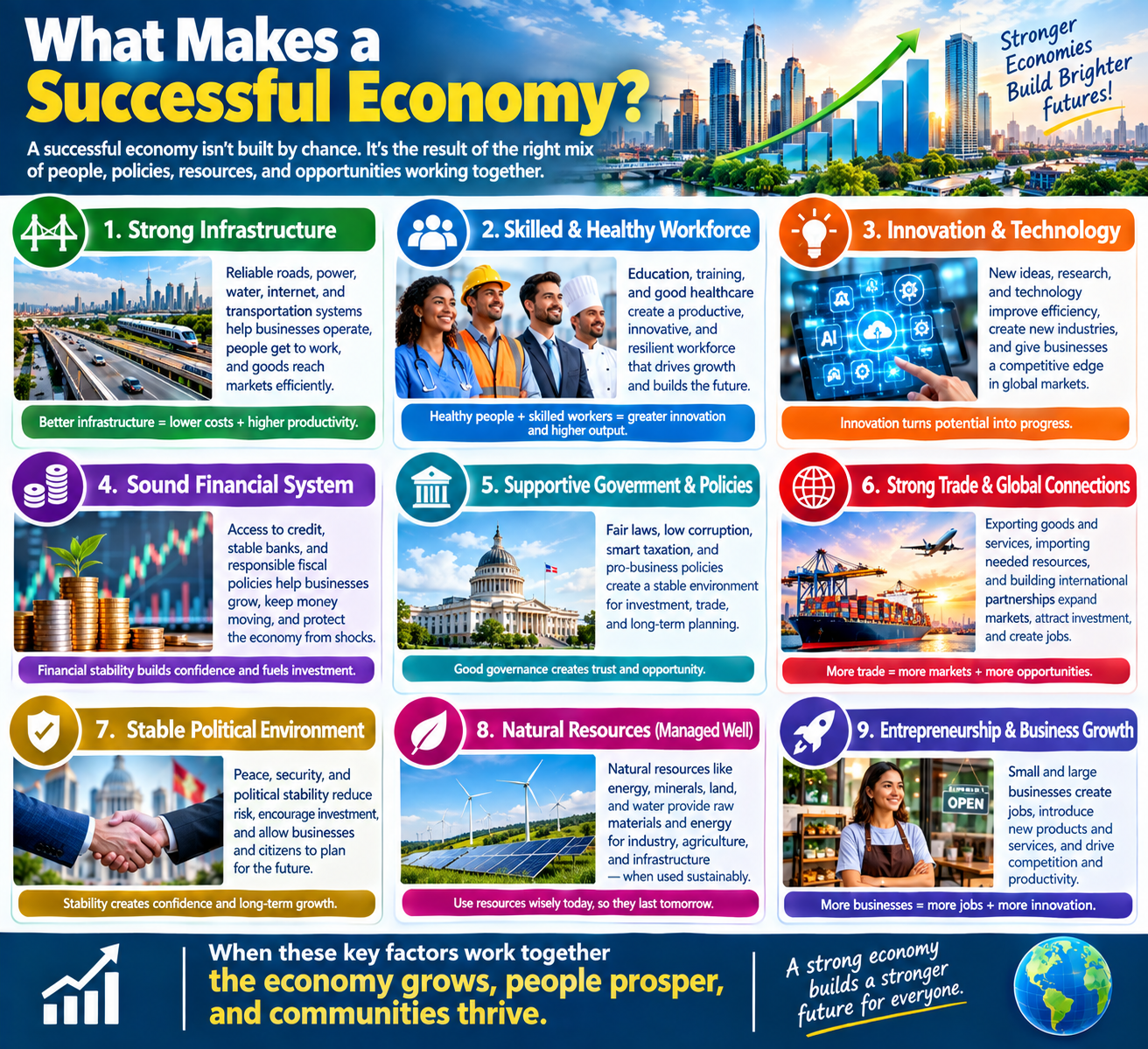
Economic growth depends on many factors, including investment, productivity, population growth, political stability, access to capital, natural resources, infrastructure and international trade.
1. War and Political Instability
Conflict is one of the most destructive forces for an economy.
Wars can destroy factories, roads, power plants and homes. They can also force workers and businesses to leave their communities.
Sudan is an extreme example of this problem.
Other countries experiencing political instability can also suffer from lower investment because businesses become uncertain about the future.
2. Weak Investment
Investment is essential for economic growth.
Businesses need money to build factories, purchase equipment, develop technology and hire workers.
If investors believe that a country is too risky, they may move their money elsewhere.
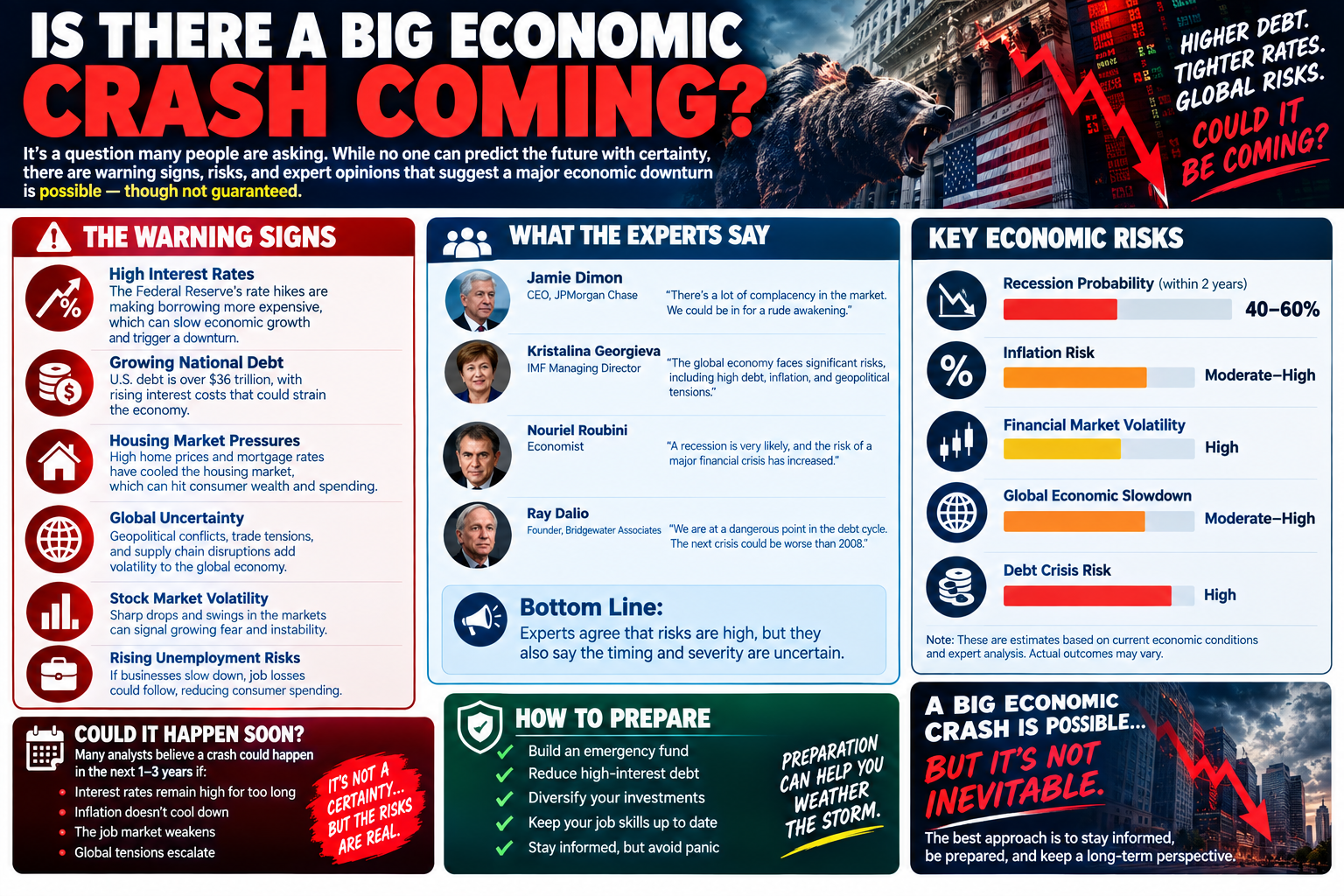
This creates a cycle in which low investment leads to low productivity, which leads to weak growth, which then discourages further investment.
3. High Debt
Government debt can also slow economic growth.
When governments spend a large portion of their budgets paying interest on debt, they have less money available for infrastructure, education, healthcare and economic development.
High debt can also discourage private investment if investors become concerned about a government’s financial stability.
4. Population and Demographic Problems
Demographics can have a major effect on economic growth.
Countries with rapidly aging populations may experience slower growth because their working-age populations are shrinking.
Japan is a good example of an advanced economy facing significant demographic challenges.
A shrinking workforce can make it harder for businesses to expand and can increase pressure on pension and healthcare systems.
Japan: A Different Kind of Slow Growth
Japan is an interesting example because it is not experiencing the kind of economic collapse seen in conflict-affected countries.
Instead, Japan faces long-term structural challenges.
The country has one of the world’s oldest populations. Its birth rate has remained low for many years, meaning the working-age population is gradually shrinking.
Japan is also dealing with high public debt and relatively modest long-term economic growth.
However, Japan remains one of the world’s largest and most technologically advanced economies.
This demonstrates that “slow growth” does not necessarily mean “poor country.”
A wealthy country can have slow GDP growth while maintaining a high standard of living.
Germany and Other Advanced Economies
Some European economies have also experienced periods of weak growth.
Germany, Europe’s largest economy, has faced challenges involving high energy costs, weak industrial production, demographic pressures and changing global demand.
Germany’s economy is heavily dependent on manufacturing and exports, particularly automobiles, machinery and industrial equipment.
The transition toward electric vehicles and increasing competition from China have created additional pressure on German manufacturers.
Other European economies have faced similar problems, although their individual circumstances differ.
Why Slow Growth Matters
Slow economic growth can have significant consequences.
When the economy grows slowly, companies may be less willing to hire new employees.
Investment can decline.
Government tax revenues may increase more slowly.
Wages can stagnate.
Young people may find it more difficult to enter the labor market.
If slow growth continues for many years, it can also make it harder for governments to reduce poverty and improve infrastructure.
However, slow growth is not always a disaster.
A wealthy country with a stable population and high productivity can maintain a good standard of living even with relatively low GDP growth.
The bigger problem occurs when slow growth combines with poverty, unemployment, high inflation or political instability.
The Difference Between Growth and Living Standards
Another important issue is that GDP growth does not tell the whole economic story.
Suppose Country A grows by 1% but has a small population and high income per person.
Country B grows by 5% but has a very large and rapidly growing population.
Country B has faster GDP growth, but its citizens may not necessarily experience faster increases in living standards.
This is why economists also examine GDP per capita, employment, inflation, productivity and household income.
For countries such as Sudan, the challenge is much greater because economic destruction affects both GDP and people’s ability to access food, housing, healthcare and employment.
Could Slow-Growing Economies Recover?
Yes.
Economic performance can change dramatically.
Countries that experience weak growth today can become fast-growing economies if they successfully implement reforms and attract investment.
Improving infrastructure, strengthening institutions, expanding education, increasing productivity and creating a stable environment for businesses can help economies recover.
For conflict-affected countries, however, peace and political stability are usually the first requirements.
Without security, long-term economic development becomes extremely difficult.
Once stability returns, reconstruction can itself create a major economic opportunity.
Roads, schools, hospitals, electricity networks and businesses all need to be rebuilt, creating demand for workers and investment.
What Does This Mean for the Global Economy?
The existence of slow-growing economies highlights how uneven the global economy has become.
Some countries are benefiting from artificial intelligence, technology, manufacturing investment and natural resources.
Others are struggling with war, debt, demographic decline or political instability.
The IMF’s 2026 global outlook projects world economic growth at around 3%, but individual countries can perform dramatically above or below that average.
This means that there is no single global economic experience.
While one country may be experiencing a boom, another may be dealing with recession or economic collapse.