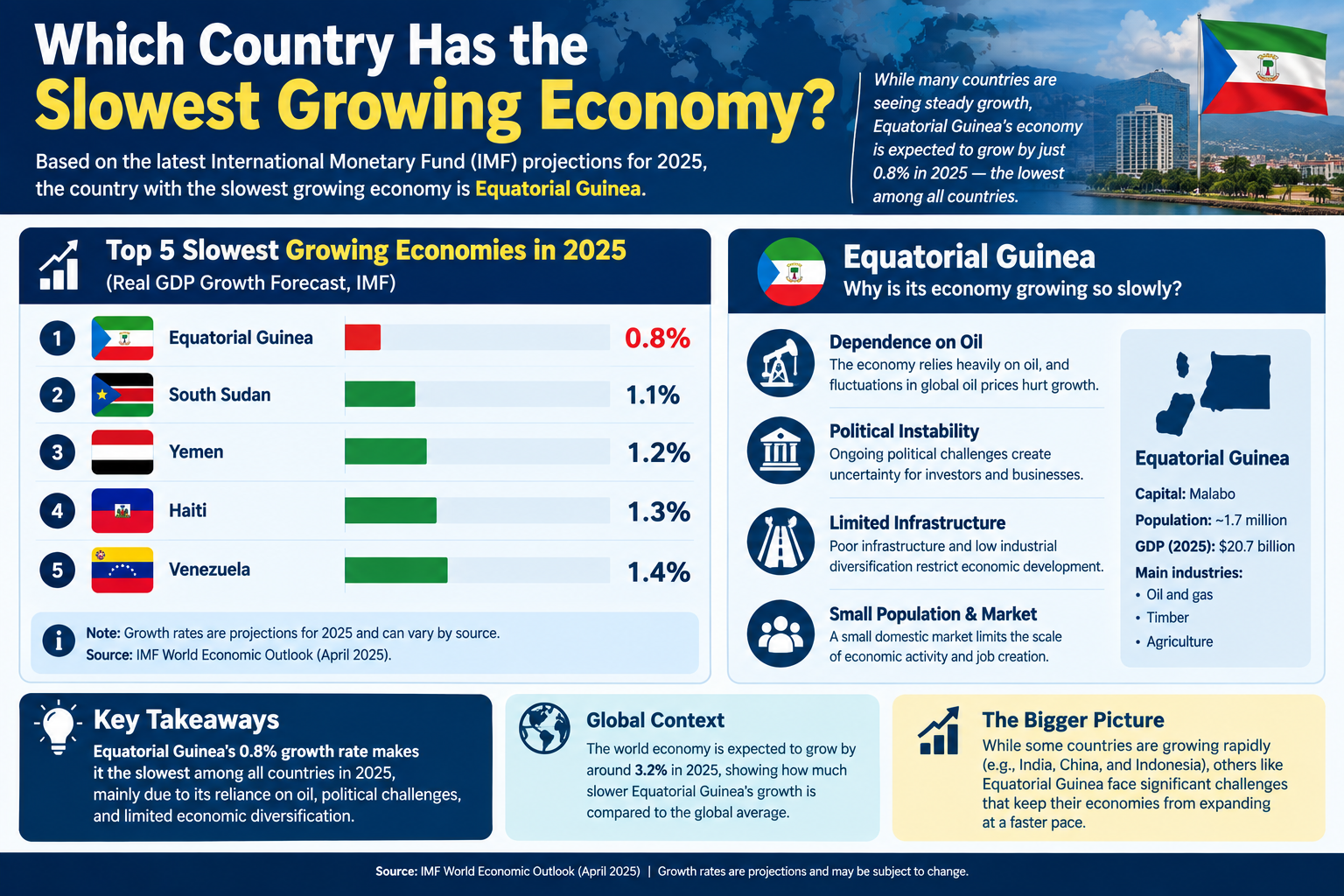
Economic growth varies dramatically from one country to another. While some economies are expanding rapidly because of strong investment, rising productivity, technology and population growth, others struggle with war, political instability, high inflation, weak investment and declining production.
So, what country has the slowest-growing economy?
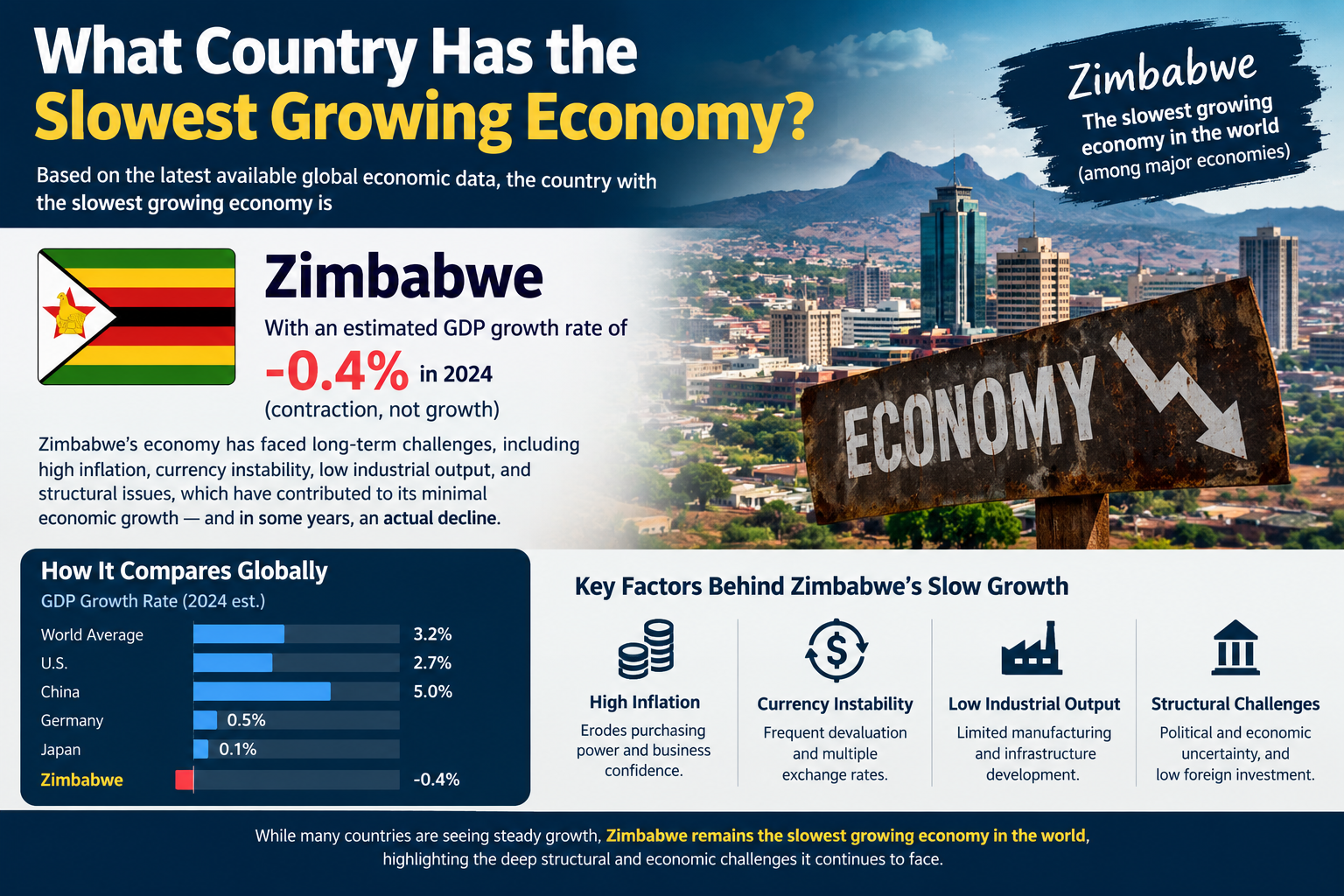
There is no single permanent answer because economic growth changes every year and different organizations publish different forecasts. However, according to the International Monetary Fund’s April 2026 World Economic Outlook, several countries are expected to experience extremely weak growth in 2026. Among countries with available IMF forecasts, Sudan is projected to grow by only about 0.7% in 2026, while Yemen is projected at about 0.5%. Some economies, however, are expected to contract rather than grow at all.
This makes it important to distinguish between a slow-growing economy and a shrinking economy.
What Does Slow Economic Growth Mean?
Economic growth is normally measured using changes in real gross domestic product, or real GDP. Real GDP measures the value of goods and services produced by an economy after adjusting for inflation.
If a country’s real GDP grows by 5%, its economy is producing significantly more than the previous year. If it grows by only 0.5%, economic activity is barely increasing.
A negative growth rate means the economy is actually shrinking.
The IMF’s April 2026 forecast puts global economic growth at approximately 3.1% for 2026, meaning countries growing at less than 1% are performing substantially below the global average.
Sudan: One of the World’s Slowest-Growing Economies
Sudan provides one of the clearest examples of an economy experiencing severe economic difficulties.
The IMF projects Sudan’s real GDP growth at approximately 0.7% in 2026. The country’s economic situation is particularly challenging because of prolonged conflict, damage to infrastructure, disruption to production and trade, and severe inflation.
The scale of the economic problems is illustrated by other indicators. The IMF’s April 2026 data show Sudan facing extremely high inflation, with average consumer-price inflation projected at around 75% in 2026. Unemployment is also projected to be extremely high.
A GDP growth rate close to zero under these conditions does not necessarily mean that households are experiencing economic stability. In fact, people can experience declining purchasing power even when headline GDP is slightly positive.
Yemen and Other Weak Economies
Yemen is another economy facing exceptionally difficult conditions. The IMF’s April 2026 data projected real GDP growth of approximately 0.5% for Yemen in 2026.
Yemen’s economic difficulties are connected to years of conflict, political instability, damaged infrastructure and disruptions to economic activity.
Other countries are also expected to record relatively weak growth. For example, Mozambique is projected to grow by only around 0.5%, while South Africa is projected at about 1.0%. The United Kingdom is projected at approximately 0.8%, demonstrating that slow growth is not limited to developing economies.
However, the reasons for weak growth can be very different.
A wealthy country might grow slowly because it has a mature economy, an aging population and limited productivity growth. A developing country might grow slowly because of conflict, poor infrastructure, political instability or a shortage of investment.
The Difference Between Slow Growth and Economic Contraction
One of the most important points when comparing countries is that the slowest-growing economy is not necessarily the country with the lowest GDP growth rate.
Some economies can actually experience negative growth.
For example, the IMF’s April 2026 projections showed several economies with negative growth rates, including Qatar at -8.6% and Bahrain at -0.5%.
An economy contracting by 8.6% is experiencing a much more severe decline than an economy growing by 0.5%.
However, one year’s negative growth does not necessarily mean that a country has a permanently weak economy. Economic output can fall because of a temporary shock, such as a war, natural disaster, collapse in commodity prices or disruption to a major industry.
Qatar, for example, is heavily influenced by energy production and large investment projects, meaning changes in particular sectors can have a substantial impact on headline GDP.
Why Do Some Countries Grow So Slowly?
There are several reasons why economic growth can be weak.
1. Political Instability
Political uncertainty can discourage companies from investing. Businesses are less likely to build factories, hire workers or expand operations when they are uncertain about the future.
Countries affected by conflict face an even greater challenge because factories, roads, electricity systems and other infrastructure can be damaged.
2. War and Conflict
War can severely reduce economic production. Workers may be displaced, businesses may close, trade routes can be disrupted and government spending may shift toward military needs.
The IMF has warned that geopolitical conflict remains an important risk to global economic growth in 2026. Its July 2026 outlook projected global growth of 3.0% in 2026, while emphasizing that the effects of war are uneven across countries.
3. High Inflation
High inflation can also weaken economic growth.
When prices rise rapidly, households lose purchasing power. People may reduce spending, while businesses face higher costs for labor, materials and financing.
Extremely high inflation can become particularly damaging when it undermines confidence in a country’s currency and financial system.
4. Low Productivity
Productivity measures how efficiently an economy produces goods and services.
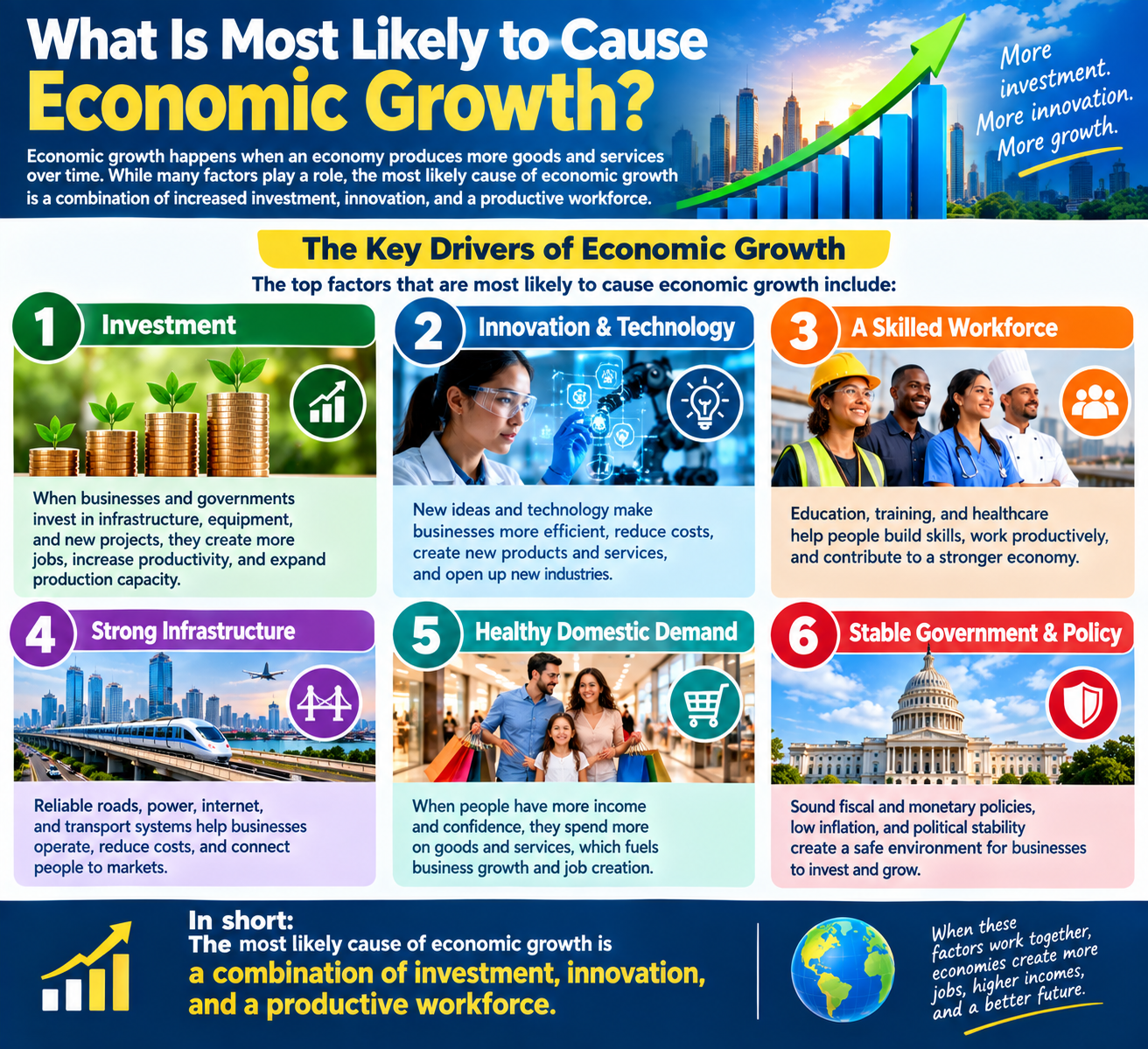
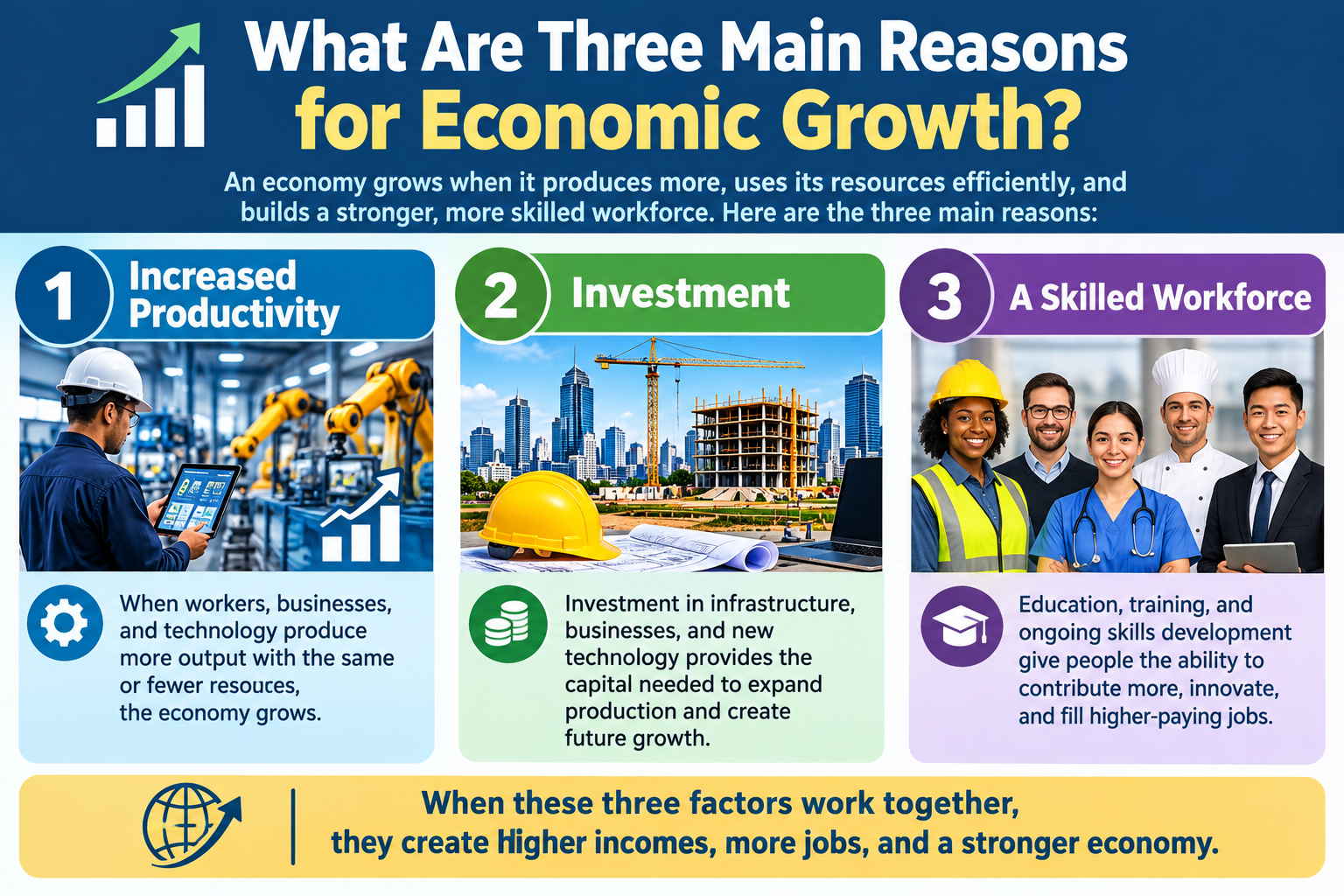
Countries with weak productivity growth often struggle to increase living standards over the long term. Without improvements in technology, skills, infrastructure and business efficiency, economic growth can remain limited.
5. Weak Investment
Investment is another major driver of economic growth.
Businesses need capital to purchase machinery, develop technology, construct facilities and expand production. Governments also need investment in roads, ports, electricity, telecommunications and education.
When investment remains low for many years, an economy’s productive capacity can suffer.
Is Slow Growth Always Bad?
Not necessarily.
A country with a very high standard of living may grow more slowly than a poorer developing country because it is already economically mature.
For example, an advanced economy growing at 1% may still have high incomes, sophisticated infrastructure and strong public institutions. A developing economy growing at 6% may be expanding rapidly but still have much lower living standards.
This is why economists look at more than GDP growth.
GDP per capita, employment, productivity, inflation, wages, poverty and access to services are also important when evaluating economic performance.
What Can Countries Do to Increase Growth?
Governments can take several steps to improve long-term economic growth.
Investing in education can create a more skilled workforce. Better infrastructure can reduce transportation and business costs. Stable financial systems can encourage investment. Strong institutions can increase confidence among businesses and investors.
Technology and innovation are also increasingly important. Countries that successfully adopt new technologies can increase productivity and create new industries.
Trade can provide another source of growth by allowing countries to specialize in industries where they are competitive and access larger international markets.
However, economic reforms cannot always overcome immediate crises. Countries affected by war or severe political instability may first need to restore basic security and economic institutions before strong growth can return.
The Global Picture
The fact that some countries are growing very slowly does not mean the global economy is necessarily collapsing.
The IMF’s July 2026 outlook projected global growth of 3.0% in 2026 and 3.4% in 2027. However, it also emphasized that growth is uneven, with countries affected differently by war, energy prices, technology investment and financial conditions.
This difference between countries is one of the most important features of the modern global economy.
Some economies are benefiting from technology investment, expanding trade and strong domestic demand. Others are struggling with conflict, inflation, debt or weak productivity.